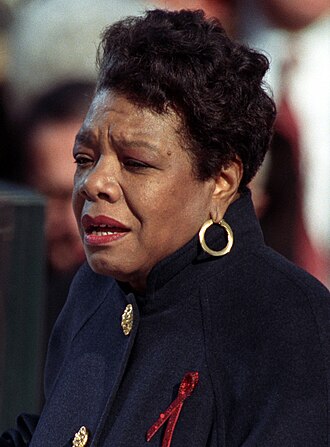
Danticat builds a girl's inherited silence around a body that was violated and a mother who kept her distance. Like Angelou, she lets the family's unspoken history press against the child's own growing sense of self, with the same attention to how a woman's name and body get claimed by others.

Reading Snapshot
421 pages, 32% longer than a typical 320-page novel
I Know Why the Caged Bird Sings
- Published
- 2002
- Pages
- 421
- Reading Time
- ~8.5 hrs
- Publisher
- Virago Press
Synopsis
Sent as young children to live with their devout, self-sufficient grandmother in Stamps, Arkansas, Maya and her brother, Bailey, grow up anchored by the family’s general store. Even within that close-knit community, the ache of abandonment and the harsh realities of Southern prejudice shape her early world.
As her journey carries her from Arkansas to St. Louis and eventually San Francisco, Maya endures devastating trauma and years of silence. Through the kindness of mentors, a deep love of literature, and her own fierce spirit, she gradually reclaims her voice and forges a hard-won independence.
Told with a poet’s luminous eye, Maya Angelou’s memoir is an enduring portrait of resilience and the liberating power of words.
Similar Books You Might Enjoy

A male narrator struggles to render the life of Macabéa, a poor typist from the Northeast, and his self-consciousness keeps exposing the gap between his voice and hers. The book turns Angelou's question of who gets to tell a life into a formal puzzle that is both funny and devastating.
Satrapi's child narrator watches revolution and war arrive in her family's home and responds with stubborn humor and moral clarity. The stark black-and-white panels make the cost of childhood innocence land as hard as Angelou's prose does, through simplicity rather than ornament.
Nabokov reconstructs a vanished aristocratic childhood through objects, rooms, and sensory fragments, treating memory as both a treasure and a trap. Readers who were moved by Angelou's rendering of a lost childhood will find the same ache here, expressed through extraordinarily controlled and ornate sentences.

Wright chronicles a boy's hunger for food, education, and dignity in a South that punishes every attempt at growth. His memoir shares Angelou's refusal to look away from racial violence, yet it is driven by a colder, more restless fury that rewards a reader who wants the anger without consolation.