Home / Letters from a Stoic
Letters from a Stoic cover

Reading Snapshot

~6.5hours
This book320 pages
Typical novel320 pages

Estimated from typical edition length

Letters from a Stoic

Published
65
Reading Time
~6.5 hrs

Synopsis

If one does not know to which port one is sailing, no wind is favorable." - Lucius Annaeus Seneca.

Letters from a Stoic still holds the power to enthrall. The epistles were written by Seneca at the end of his life, during his retirement, after he had worked for the Emperor Nero for fifteen years. They are addressed to Lucilius, the then procurator of Sicily, although he is known only through Seneca's writings. Whether or not Seneca and Lucilius actually corresponded, or whether in fact Seneca created the work as a form of fiction, is not clear from the historical record.

This is the third volume of the Letters, Epistles Letter XCIII - CXXIV .

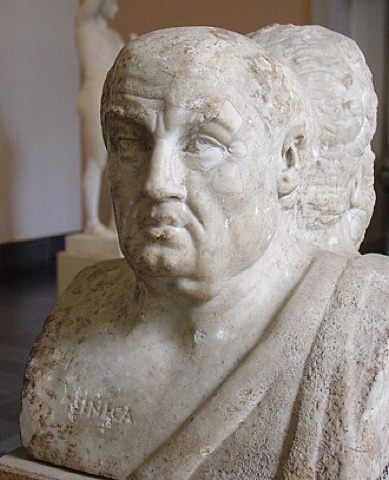
Seneca

About Seneca

4 BC–AD 65

Seneca the Younger (c. 4 BC – AD 65), fully Lucius Annaeus Seneca and also known simply as Seneca, was a Roman Stoic philosopher, statesman, dramatist, and—in one work—satirist of the Silver Age of Latin literature. Source: Seneca the Younger on Wikipedia.

Similar Books You Might Enjoy

Essays in IdlenessYoshida Kenkō
Essays in Idleness
Yoshida Kenkō

Kenkō's short, unpolished essays circle the same themes as Seneca's letters: vanity, grief, and the beauty of impermanence. Where Seneca argues from the Forum, Kenkō writes from a solitary mountain hut, and the result is equally pointed and far less orderly.

Letters to a Young Poet cover
Letters to a Young Poet
Rainer Maria Rilke, M D Herter Norton

Rilke's ten letters to an aspiring poet offer no conquest of anxiety. They ask the reader to live with open questions, and that advice reads as a gentler counterpart to Seneca's demand for resolve.

Memoirs of Hadrian cover
Memoirs of Hadrian
Marguerite Yourcenar, Grace Frick

Written as a dying emperor's long letter to the young Marcus Aurelius, this novel turns classical philosophy into flesh, regret, and sensory memory. It captures the exact tension between public power and private mortality that hums beneath Seneca's prose, rendered in luminous, austere sentences.

The Remains of the Day cover
The Remains of the Day
Kazuo Ishiguro

Ishiguro follows a butler whose self-control has cost him his capacity for feeling. The novel tests the Stoic ideal by showing what it costs the person who practices it most faithfully.

Four Thousand Weeks: Time Management for MortalsOliver Burkeman
Four Thousand Weeks: Time Management for Mortals
Oliver Burkeman

Dismantling modern optimization culture with dry wit, Burkeman argues that peace begins the moment you accept your radical finitude. It translates Seneca's sharpest warnings about squandering life into a brisk, deeply practical manual for the attention-economy era.