Home / Night
Night cover

Reading Snapshot

~2.5hours
This book126 pages
Typical novel320 pages

126 pages, 61% shorter than a typical 320-page novel

Night

Published
1981
Pages
126
Reading Time
~2.5 hrs
Publisher
Penguin

Synopsis

In this searing memoir, Elie Wiesel recounts his youth in a Hungarian ghetto and his sudden deportation to the Nazi death camps of Auschwitz and Buchenwald. Taken from his home as a teenager, he is thrust into an unimaginable world of terror and loss.

As he fights to survive the daily brutality of the camps, Wiesel wrestles with profound questions of faith, morality, and human cruelty. His testimony goes beyond a record of horror to confront what it means to endure when humanity itself seems to vanish.

Spare, candid, and deeply poignant, Night stands as an essential testament to memory and the enduring power of bearing witness.

Elie Wiesel, S Rodway

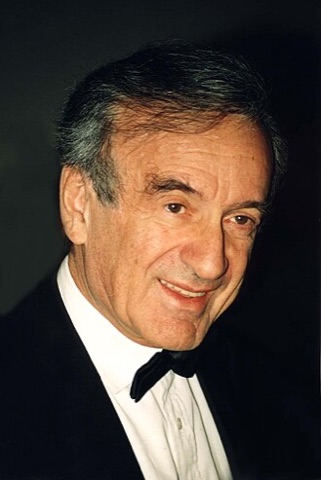
About Elie Wiesel, S Rodway

1928–2016

Romanian-born writer, professor, Holocaust survivor, and author of Night who dedicated his life to memory and human dignity.

Similar Books You Might Enjoy

Silence cover
Silence
Shusaku Endo

Endo follows a Portuguese Jesuit in seventeenth-century Japan who watches believers tortured for refusing to renounce their faith, and the question of whether God is listening becomes as sharp as Wiesel's. The novel's restraint lets the cruelty land without melodrama, much as Night does. The moral pressure lies in what the narrator is forced to do, not in what he feels.

Fatelessness cover
Fatelessness
Imre Kertesz, Tim Wilkinson

Kertész's narrator is a fifteen-year-old who meets deportation and the camps with a flat, almost bureaucratic calm that makes the reader's stomach drop. Like Night, the book treats survival as something that happens to a boy who has lost the frame that made suffering meaningful. Kertész pushes further into the question of how a person can accept the unacceptable.

Auschwitz and AfterCharlotte Delbo
Auschwitz and After
Charlotte Delbo

Delbo, a French political prisoner, writes in fragmentary, rhythmic prose about the women who shared her convoy and the years after liberation. Her sentences break off where memory breaks, which echoes the stripped-down cadence that makes Night so hard to set aside. The book also shows what survival looked like once the camp was gone.

The Painted Bird (Transaction Large Print S ) cover
The Painted Bird (Transaction Large Print S )
Jerzy Kosinski

A boy with dark hair wanders through a rural landscape where superstition and violence are everyday facts, and he learns to survive by becoming hard to read. Kosinski, like Wiesel, shows a child forced to understand adult cruelty without the vocabulary to name it. The novel's coldness is a deliberate choice that makes its moments of cruelty feel unbearably immediate.

Still Alive: A Holocaust Girlhood RememberedRuth Klüger
Still Alive: A Holocaust Girlhood Remembered
Ruth Klüger

Klüger, who survived Auschwitz and Christianstadt as a girl, later became a professor of German literature, and she turns her critical intelligence on her own childhood. Her memoir interrogates the stories people tell about survival, including the ones that comfort. Readers who valued the unflinching honesty of Night will find the same refusal to make suffering tidy.