Home / The Adventures of Huckleberry Finn
The Adventures of Huckleberry Finn cover

Reading Snapshot

~5.5hours
This book281 pages
Typical novel320 pages

281 pages, 12% shorter than a typical 320-page novel

The Adventures of Huckleberry Finn

Published
2001
Pages
281
Reading Time
~5.5 hrs
Publisher
Penguin Books

Synopsis

Along the banks of the nineteenth-century Mississippi River, young Huckleberry Finn longs to escape both well-meaning guardians and his abusive father. Staging his flight, he sets out on a raft and soon crosses paths with Jim, an enslaved man running for his freedom.

Drifting deeper into the antebellum South, the pair navigate perilous encounters with con men, feuding families, and the harsh realities of a divided society. Along the way, Huck must weigh the rules he was taught against his own conscience and loyalty to his friend.

Told in Huck’s lively, unmistakable vernacular, Mark Twain’s novel blends sharp satire with warmth in an enduring story of friendship and freedom.

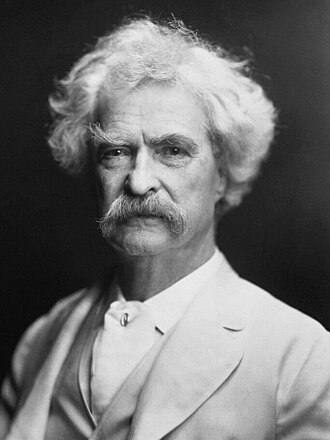
Mark Twain

About Mark Twain

1835–1910

Mark Twain, born Samuel Langhorne Clemens, was a prolific American author and humorist. Twain is best known for his novels Adventures of Huckleberry Finn (1884), which has been called "the Great American Novel", and The Adventures of Tom Sawyer (1876). He is extensively quoted. Twain was a friend to presidents, artists, industrialists, and European royalty.

Similar Books You Might Enjoy

The Tin Drum cover
The Tin Drum
Gunther Grass

Oskar, a three-year-old who decides at his birthday to stop growing, watches the adults of Danzig sink into complicity with a clarity that makes their hypocrisy comic and monstrous. Like Huck, he refuses the moral framework handed to him, but Grass turns that refusal into a weapon sharp enough to indict an entire nation.

The Lonely Londoners (Longman Caribbean Writer Series) (Longman Caribbean Writer Series) cover
The Lonely Londoners (Longman Caribbean Writer Series) (Longman Caribbean Writer Series)
Samuel Selvon

Selvon writes London through the rolling, unpunctuated dialect of Trinidadian men who arrive expecting the mother country and find a cold city that treats them as strangers. The humor works the way Twain's does: the narration jokes, but the joke keeps exposing who gets to belong and who gets left on the riverbank of the street.

Kim cover
Kim
Rudyard Kipling

A street-wise orphan in Lahore slips between identities, roaming the Grand Trunk Road with a lama and a spy network, and Kipling lets the boy's appetite for the road outrun the imperial machinery that wants to sort him. It is a road novel where the mentor relationship carries the same warmth and moral unease as the raft scenes.

Tobacco Road cover
Tobacco Road
Erskine Caldwell

Jeeter Lester's starving family clings to a worthless patch of Georgia clay, and Caldwell renders their ignorance and desperation with a flat, almost cheerful comic detachment that never lets the reader look away. Twain's river exposes slavery's logic through a boy's eyes; Caldwell exposes the rot of inherited poverty through people who cannot see their own circumstances at all.

The Autobiography of Malcolm X cover
The Autobiography of Malcolm X
Malcolm X, Alex Haley

Malcolm X teaches himself to read in prison and turns the dictionary and the library into a moral education, and the prose carries the hard-won clarity of someone who has been lied to by every institution he trusted. Huck's conscience is an instinct; Malcolm's is forged in argument, and reading his account alongside Twain shows how a voice outside the sanctioned story can dismantle it.