Home / The Anxious Generation
The Anxious Generation cover

Reading Snapshot

~6.5hours
This book320 pages
Typical novel320 pages

Estimated from typical edition length

The Anxious Generation

Published
2024
Reading Time
~6.5 hrs

Synopsis

From New York Times bestselling coauthor of The Coddling of the American Mind, an essential investigation into the collapse of youth mental health-and a plan for a healthier, freer childhood After more than a decade of stability or improvement, the mental health of adolescents plunged in the early 2010s. Rates of depression, anxiety, self-harm, and suicide rose sharply, more than doubling on most measures.

Why? In The Anxious Generation, social psychologist Jonathan Haidt lays out the facts about the epidemic of teen mental illness that hit many countries at the same time.

He then investigates the nature of childhood, including why children need play and independent exploration to mature into competent, thriving adults. Haidt shows how the "play-based childhood" began to decline in the 1980s, and how it was finally wiped out by the arrival of the "phone-based childhood" in the early 2010s.

He presents more than a dozen mechanisms by which this "great rewiring of childhood" has interfered with children's social and neurological development, covering everything from sleep deprivation to attention fragmentation, addiction, loneliness, social contagion, social comparison, and perfectionism. He explains why social media damages girls more than boys and why boys have been withdrawing from the real world into the virtual world, with disastrous consequences for themselves, their families, and their societies.

Most important, Haidt issues a clear call to action. He diagnoses the "collective action problems" that trap us, and then proposes four simple rules that might set us free.

He describes steps that parents, teachers, schools, tech companies, and governments can take to end the epidemic of mental illness and restore a more humane childhood. Haidt has spent his career speaking truth backed by data in the most difficult landscapes-communities polarized by politics and religion, campuses battling culture wars, and now the public health emergency faced by Gen Z.

We cannot afford to ignore his findings about protecting our children-and ourselves-from the psychological damage of a phone-based life

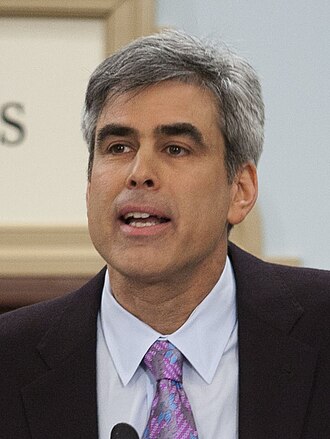
Jonathan Haidt

About Jonathan Haidt

b. 1963

Jonathan David Haidt (/haɪt/; born October 19, 1963) is an American social psychologist, Professor of Ethical Leadership at New York University Stern School of Business, and author. His main areas of study are the psychology of morality and moral emotions. Haidt's main scientific contributions come from the psychological field of moral foundations theory, which attempts to explain the evolutionary origins of human moral reasoning on the basis of innate, gut feelings rather than logical reason. The theory was later extended to explain the different moral reasoning and how they relate to political ideology, with different political orientations prioritizing different sets of morals. The research served as a foundation for future books on various topics. Haidt has written three books for general audiences, including: The Happiness Hypothesis: Finding Modern Truth in Ancient Wisdom (2006) explores the relationship between ancient philosophies and modern science; The Righteous Mind: Why Good People are Divided by Politics and Religion (2012) examines how morality is shaped by emotion and intuition more than by reasoning, and why differing political groups have different notions of right and wrong; and The Coddling of the American Mind: How Good Intentions and Bad Ideas Are Setting Up a Generation for Failure (2018), co-written with Greg Lukianoff, explores the rising political polarization and changing culture on college campuses, and its effects on mental health. Haidt has attracted both support and criticism for his critique of the current state of universities and his interpretation of progressive values. He has been named one of the "top global thinkers" by Foreign Policy magazine, and one of the "top world thinkers" by Prospect magazine.8 He is among the most cited researchers in political and moral psychology, and is considered among the top 25 most influential living psychologists

Similar Books You Might Enjoy

The Death and Life of Great American CitiesJane Jacobs
The Death and Life of Great American Cities
Jane Jacobs

Before smartphones pulled children indoors, postwar urban planning dismantled the lively, mixed-use sidewalks where kids once roamed safely under the informal watch of neighbors. Jacobs dissects how physical spaces either cultivate real-world trust or isolate residents, offering the architectural prequel to the collapse of play-based childhood.

Amusing Ourselves to DeathNeil Postman
Amusing Ourselves to Death
Neil Postman

Postman argues that every dominant medium reshapes the very architecture of public thought, turning politics, education, and conversation into bite-sized entertainment. Swap television for algorithmic feeds and his crisp, biting warning reads like a time capsule sent straight to the smartphone era.

Feed cover
Feed
M T Anderson

Set in a near future where adolescents have the internet wired directly into their brains, this razor-sharp novel dramatizes the emotional and linguistic flattening of a permanently online youth. Anderson captures the exact cocktail of consumerist distraction, social performance, and hollow anxiety that data-driven nonfiction can only measure from the outside.

Hunt, Gather, ParentMichaeleen Doucleff
Hunt, Gather, Parent
Michaeleen Doucleff

Traveling to Maya, Inuit, and Hadzabe communities, science journalist Michaeleen Doucleff documents how ancient, low-anxiety child-rearing practices foster deep independence and emotional regulation without constant adult micromanagement. It provides the tangible, everyday blueprint for raising resilient kids outside the modern hyper-protective bubble.