
Reading Snapshot
297 pages, 7% shorter than a typical 320-page novel
The Book of Lost Tales, Part Two (The History of Middle-Earth, Vol 2)
- Published
- 1992
- Pages
- 297
- Reading Time
- ~6 hrs
- Publisher
- Houghton Mifflin
Synopsis
The extraordinary history of Middle-earth, edited by Christopher Tolkien
The Book of Lost Tales stands at the beginning of the entire conception of Middle-earth and Valinor. Embedded in English legend and English association, they were set in the narrative frame of a great westward voyage over the Ocean by a mariner named Eriol (or Ælfwine) to Tol Eressëa, the Lonely Isle, where Elves dwelt; from them he learned their true history, the Lost Tales of Elfinesse. In the Tales are found the earliest accounts and original ideas of Gods and Elves; Dwarves and Orcs; the Silmarils and the Two Trees of Valinor; Nargothrond and Gondolin; and the geography and cosmology of the invented world.
Praise for Book of Lost Tales 1
“In these tales we have the scholar joyously gamboling in the thickets of his imagination. . . . A commentary and notes greatly enrich the quest.” — The Daily Telegraph
“Affords us an almost over-the-shoulder view into the evolving creative process and genius of J.R.R. Tolkien in a new, exciting aspect . . .The superb, sensitive, and extremely helpful commentary and editing done by Christopher Tolkien make all of this possible.” —Mythlore
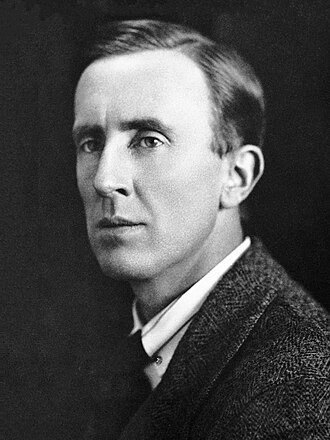
About J.R.R. Tolkien
John Ronald Reuel Tolkien (1892-1973) was a major scholar of the English language, specialising in Old and Middle English. Twice Professor of Anglo-Saxon (Old English) at the University of Oxford, he also wrote a number of stories, including most famously The Hobbit (1937) and The Lord of the Rings (1954-1955), which are set in a pre-historic era in an invented version of the world which he called by the Middle English name of Middle-earth. This was peopled by Men (and women), Elves, Dwarves, Trolls, Orcs (or Goblins) and of course Hobbits. He has regularly been condemned by the Eng. Lit. establishment, with honourable exceptions, but loved by literally millions of readers worldwide. In the 1960s he was taken up by many members of the nascent "counter-culture" largely because of his concern with environmental issues. In 1997 he came top of three British polls, organised respectively by Channel 4 / Waterstone's, the Folio Society, and SFX, the UK's leading science fiction media magazine, amongst discerning readers asked to vote for the greatest book of the 20th century.