Home / The Children of Dune: The Third Dune Novel
The Children of Dune: The Third Dune NovelFrank Herbert

Reading Snapshot

~6.5hours
This book320 pages
Typical novel320 pages

Estimated from typical edition length

The Children of Dune: The Third Dune Novel

Reading Time
~6.5 hrs

Synopsis

Nine years after Emperor Paul Muad’Dib vanished into the desert wastelands of Arrakis, his twin children, Leto and Ghanima Atreides, have inherited his extraordinary prophetic abilities. Their gifts make them vital pawns to their manipulative aunt, Alia, who rules the Empire in the name of House Atreides.

As Alia’s grip on power falters, she faces treason on two fronts: the displaced House Corrino is plotting to reclaim the throne, while an enigmatic figure known as the Preacher stirs the Fremen toward open revolt. Desperate to preserve her dynasty, Alia seeks to harness the twins’ visions—unaware that Leto and Ghanima are quietly charting a destiny of their own.
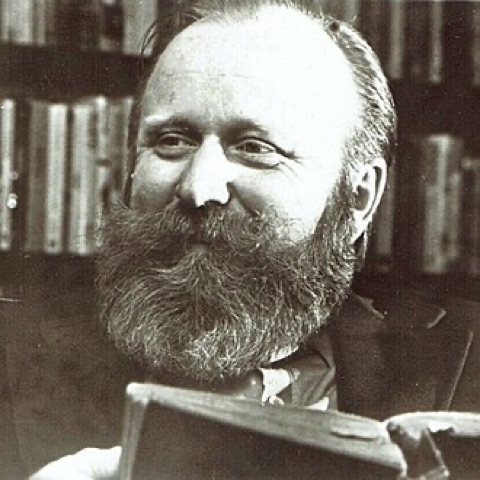
Frank Herbert

About Frank Herbert

1920–1986

Franklin Patrick Herbert Jr. (October 8, 1920 – February 11, 1986) was an American science-fiction author, best known for his 1965 novel Dune and its five sequels. He also wrote short stories and worked as a newspaper journalist, photographer, book reviewer, ecological consultant, and lecturer. Dune is the best-selling science fiction novel of all time, and the series is a classic of the science-fiction genre. The series has been adapted numerous times, including the feature film David Lynch's Dune (1984), the miniseries Frank Herbert's Dune (2000) and Children of Dune (2003), and a motion picture trilogy currently in production, with Denis Villeneuve's Dune (2021) and Dune: Part Two (2024) having been released.

Similar Books You Might Enjoy

Solaris cover
Solaris
Stanislaw Lem

Lem's ocean planet is a sentient system that resists every human attempt to understand or control it, much as Arrakis's ecology frustrates its rulers. The novel's dread comes from the gap between what a mind can perceive and what it can bear to know, a nerve Herbert pulls from the opposite direction.

The Dispossessed: An Ambiguous Utopia cover
The Dispossessed: An Ambiguous Utopia
Ursula K Le Guin

Le Guin sets two worlds against each other, one arid and one lush, and asks how a society organizes itself around scarcity and inheritance. Like Herbert, she treats politics as a living system that shapes bodies, landscapes, and the private loyalties of its people.

The Shadow of the Torturer cover
The Shadow of the Torturer
Gene Wolfe

Severian's narration is a confession shaped by a secret inheritance, and Wolfe withholds meaning until the reader rebuilds the myth from fragments. The sense of a ruined future carrying the weight of a sacred past echoes the ritual dread that runs through Herbert's later Dune books.

Parable of the Sower cover
Parable of the Sower
Octavia Butler

Lauren Olamina begins to articulate a new faith as the world around her disintegrates, turning her visions into doctrine that others both follow and fear. Butler examines how a gifted person's insight becomes a social force, the same dangerous transmission of prophecy that defines Paul Atreides' legacy.

Braiding Sweetgrass: Indigenous Wisdom, Scientific Knowledge and the Teachings of PlantsRobin Wall Kimmerer
Braiding Sweetgrass: Indigenous Wisdom, Scientific Knowledge and the Teachings of Plants
Robin Wall Kimmerer

Kimmerer weaves plant biology, Potawatomi teachings, and personal memory into an argument that human survival depends on reciprocity with a living land. Readers who loved the ecological stakes of Dune will find the same conviction that a planet's health is a moral and inherited responsibility, here stated as nonfiction.