Home / The Graveyard Book
The Graveyard Book cover

Reading Snapshot

~5hours
This book250 pages
Typical novel320 pages

250 pages, 22% shorter than a typical 320-page novel

The Graveyard Book

Published
2008
Pages
250
Reading Time
~5 hrs
Publisher
Subterranean Press

Synopsis

Bod is an unusual boy growing up in an unusual place: he is the only living resident of a sprawling graveyard. Raised from infancy by ghosts, werewolves, and other cemetery denizens, he learns the antiquated customs of his guardians alongside ghostly skills like the ability to Fade from mortal sight.

Yet the sanctuary of the cemetery cannot hold him forever. As Bod comes of age, he must face the wonders and terrors waiting in both the world of the dead and the world of the living beyond the gates.

Blending macabre charm with quiet warmth, Neil Gaiman crafts an enchanting coming-of-age story about unconventional family and the courage it takes to step into the world.

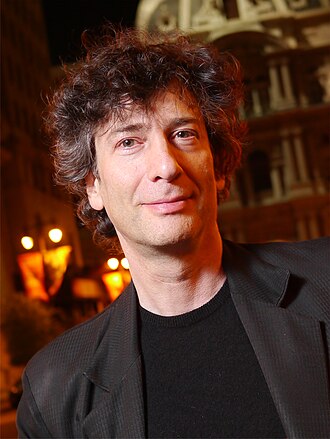
Neil Gaiman

About Neil Gaiman

b. 1960

Neil Richard MacKinnon Gaiman born Neil Richard Gaiman, 10 November 1960) is an English author of short fiction, novels, comic books, graphic novels, audio theatre, and films. His notable works include the comic book series The Sandman and novels Stardust, American Gods, Coraline, and The Graveyard Book. He has won numerous awards, including the Hugo, Nebula, and Bram Stoker awards, as well as the Newbery and Carnegie medals. He is the first author to win both the Newbery and the Carnegie medals for the same work, The Graveyard Book (2008). In 2013, The Ocean at the End of the Lane was voted Book of the Year in the British National Book Awards.

Similar Books You Might Enjoy

A Monster Calls cover
A Monster Calls
Patrick Ness, Jim Kay (Illustrator)

A boy whose mother is dying receives nightly visits from an ancient creature that tells him three stories, and the book keeps the supernatural lean of The Graveyard Book while making the unseen force an honest witness to fear. Ness uses the fairy tale's structure to say what a child cannot, which gives the grief the same pressured, intimate charge as Bod's graveyard years.

We Have Always Lived in the Castle cover
We Have Always Lived in the Castle
Shirley Jackson

Merricat Blackwood and her sister live shut off from a village that wants them gone, and their private rituals turn a family home into a self-sufficient world with its own laws. Jackson shares Gaiman's gift for making an insular community feel both protective and quietly sinister, and she makes the outsiders' loyalty to each other the true enchantment.

The Summer Book cover
The Summer Book
Tove Jansson, Esther Freud

Sophia and her grandmother spend a summer on a small island, bickering, exploring, and confronting mortality in lightly sketched episodes that carry enormous weight. Translated from Swedish, the book approaches death and the natural world with the same unsentimental tenderness that makes Gaiman's graveyard feel like a home rather than a horror. Its unhurried, sly intimacy between generations rewards slow reading.

The Ghost BrideYangsze Choo
The Ghost Bride
Yangsze Choo

Li Lan, a nineteen-year-old in 1890s colonial Malaya, is summoned to become the posthumous bride of a dead man, and she must navigate a spirit realm of bureaucracy, ghostly courtship, and family debt. Choo builds an afterlife with its own economy and manners, so the dead feel as socially real as the living, much as Gaiman's graveyard runs on its own customs. The result is a ghost story where the stakes are lineage and survival.

The Hidden Life of Trees: What They Feel, How They Communicate—Discoveries from a Secret WorldPeter Wohlleben
The Hidden Life of Trees: What They Feel, How They Communicate—Discoveries from a Secret World
Peter Wohlleben

A German forester describes trees that share nutrients, warn one another of danger, and nurture their young through underground fungal networks, reframing the woods as a community of mutual care. Readers who loved the way Gaiman makes a graveyard a nurturing society will find the same warmth applied to the living world, with real science carrying the emotional argument. Translated into English, it reads with the wonder of a fable.