Home / The Restaurant at the End of the Universe (Hitch Hiker's Guide to the Galaxy)
The Restaurant at the End of the Universe (Hitch Hiker's Guide to the Galaxy) cover

Reading Snapshot

~3.5hours
This book185 pages
Typical novel320 pages

185 pages, 42% shorter than a typical 320-page novel

The Restaurant at the End of the Universe (Hitch Hiker's Guide to the Galaxy)

Published
1980
Pages
185
Reading Time
~3.5 hrs
Publisher
Pan

Synopsis

Facing annihilation by the warlike Vogons is a curious time to crave a cup of tea, yet that is precisely where the cosmically displaced Arthur Dent finds himself. Hurtling across space powered by pure improbability, Arthur and his eccentric crew are desperately searching for a decent place to eat.

Joined by his friend Ford Prefect, the two-headed ex-president Zaphod Beeblebrox, fellow Earth refugee Trillian, and the perpetually gloomy android Marvin, Arthur sets course for the galaxy's ultimate hot spot. Their destination promises apocalyptic entertainment and fine dining where the food literally speaks for itself—if they can survive long enough to arrive.

With sharp wit and boundless absurdity, Douglas Adams turns the end of everything into a delightfully sideways comic adventure.

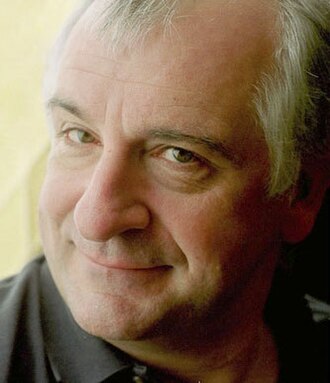
Douglas Adams

About Douglas Adams

1952–2001

Douglas Adams was born in Cambridge in March 1952. He was creator of all the various manifestations of The Hitchhiker's Guide to the Galaxy. Douglas died unexpectedly in May 2001 of a sudden heart attack at the age of 49.

Similar Books You Might Enjoy

The CyberiadStanisław Lem
The Cyberiad
Stanisław Lem

Lem's constructor-robots Trurl and Klapaucius compete in escalating tales of engineering hubris, where each invention is built with mathematical rigor and then pushed past the point of sense. The deadpan precision that makes Adams's bureaucracies funny becomes, in Lem, a cold and brilliant parody of tyranny and technological vanity.

Invisible Cities cover
Invisible Cities
Italo Calvino

Marco Polo describes fifty-five imaginary cities to Kublai Khan, and each description is a compact, elegant puzzle about memory, desire, and how places mean things. Calvino delivers the same kind of rapid-fire imaginative inventiveness Adams uses, but he slows it into lyrical geometry, rewarding readers who enjoy noticing how structure itself generates wonder.

"Surely You're Joking Mr Feynman!"Richard P Feynman
"Surely You're Joking Mr Feynman!"
Richard P Feynman

Feynman's stories of cracking safes, drumming in topless bars, and solving problems for the sheer pleasure of it share Adams's enthusiasm for treating the universe as a delightful thing to poke at. The comedy here is real life rather than invention, and the stubborn curiosity underneath feels like the same restless intelligence that powers the Guide.

The Eyre Affair (Thursday Next)Jasper Fforde
The Eyre Affair (Thursday Next)
Jasper Fforde

Fforde builds an entire alternate 1985 where literature is a police matter and characters can be kidnapped out of books, then plays every rule of that world with the same dry, cheerful seriousness Adams brings to galactic bureaucracy. The jokes land because the internal logic is treated as sacred, which is exactly the trick that makes the Guide so durable.

Cat's Cradle cover
Cat's Cradle
Kurt Vonnegut

Vonnegut's narrator treats the end of the world with the flat, unbothered tone of someone reading a dull manual, while religions, science, and corporate ambition all get skewered. Like Adams, he uses short chapters and absurd invented doctrines to make cosmic disaster feel both ridiculous and oddly consoling.