Home / The Stranger
The Stranger cover

Reading Snapshot

~3hours
This book144 pages
Typical novel320 pages

144 pages, 55% shorter than a typical 320-page novel

The Stranger

Published
1989
Pages
144
Reading Time
~3 hrs
Publisher
Knopf Doubleday Publishing Group

Synopsis

In sun-drenched Algiers, an ordinary, emotionally detached man named Meursault moves through life with quiet indifference, even in the wake of his mother’s death. His unremarkable routine is shattered when he is unwittingly drawn into a senseless act of violence on a blazing beach.

As the consequences unfold, Meursault finds himself judged as much for his refusal to perform conventional grief and remorse as for the crime itself. Stripped of easy comforts and illusions, he is forced to confront the stark indifference of the world around him.

Written with spare, haunting clarity, Albert Camus’s debut novel endures as an unsettling meditation on the absurd and the fragile search for meaning.

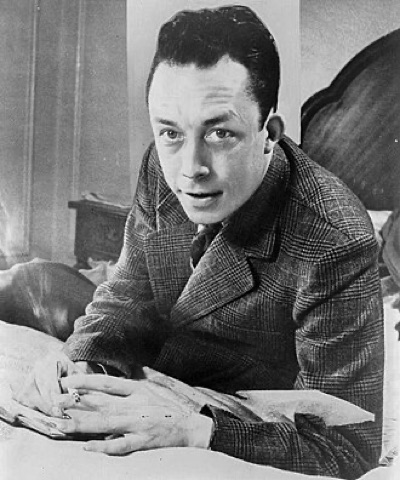
Albert Camus

About Albert Camus

1913–1960

Albert Camus was a French Algerian author, philosopher, and journalist who was awarded the Nobel Prize for Literature in 1957. He was a key philosopher of the 20th-century and his most famous work is the novel L'Étranger (The Stranger). In 1949, Camus founded the Group for International Liaisons within the Revolutionary Union Movement, which was a group opposed to some tendencies of the surrealistic movement of André Breton. Camus was the second-youngest recipient of the Nobel Prize for Literature - after Rudyard Kipling - when he became the first African-born writer to receive the award. He is the shortest-lived of any literature laureate to date, having died in an automobile accident just over two years after receiving the award. He is often cited as a proponent of existentialism, the philosophy that he was associated with during his own lifetime, but Camus himself rejected this particular label. In an interview in 1945, Camus rejected any ideological associations: "No, I am not an existentialist. Sartre and I are always surprised to see our names linked…"

Similar Books You Might Enjoy

The Blind Owl cover
The Blind Owl
Sadegh Hedayat

Hedayat's unnamed narrator opium-dreams his way through a claustrophobic inner life where reality keeps slipping its moorings, much like Meursault's flat gaze turns ordinary events into something unreadable. The prose circles a single obsession until the reader feels the same suffocating repetition of thought.

If This Is a Man / The TrucePrimo Levi, Stuart Woolf
If This Is a Man / The Truce
Primo Levi, Stuart Woolf

Levi documents the camp with a precise, almost clinical calm that exposes how ordinary routines and bureaucratic indifference can erase moral feeling. The same detachment that makes Meursault unsettling becomes, here, a survival strategy that the reader must confront as horror.

The Talented Mr Ripley cover
The Talented Mr Ripley
Patricia Highsmith

Tom Ringer drifts through Italian heat and beauty with the same unreadable calm, feeling little while the plot tightens around him. Highsmith makes the sun itself an accomplice, so the reader gets the lethal, languid pleasure of watching someone commit murder without visible guilt.

The Passion According to G.H.Clarice Lispector
The Passion According to G.H.
Clarice Lispector

A woman alone in her apartment confronts a cockroach and loses her sense of self, a collapse rendered with the same stripped-down, sensory clarity that lets Camus describe the world before it means anything. Lispector turns a domestic moment into an existential reckoning the reader cannot easily leave.

The Hotel IrisYoko Ogawa
The Hotel Iris
Yoko Ogawa

A teenage girl working at a seaside hotel is drawn into a relationship with a violent, enigmatic translator, and Ogawa narrates their cruelty with a flat, almost tender restraint. The emotional vacancy here feels as deliberate as Meursault's, so the reader is left to supply the moral weight the narrator refuses to.