
Reading Snapshot
325 pages, right around a typical 320-page novel
True at First Light
- Published
- 2000
- Pages
- 325
- Reading Time
- ~6.5 hrs
- Publisher
- Arrow
- ISBN
- 9780099282129
- Language
- EN
Synopsis
Both revealing self-portrait and dramatic fictional chronicle of his final African safari, Ernest Hemingway's last unpublished work was written when he returned from Kenya in 1953. Edited by his son Patrick, who accompanied his father on the safari, True at First Light offers rare insights into the legendary American writer in the year of the hundredth anniversary of his birth.
A blend of autobiography and fiction, the book opens on the day his close friend Pop, a celebrated hunter, leaves Ernest in charge of the safari camp and news arrives of a potential attack from a hostile tribe. Drama continues to build as his wife, Mary, pursues the great black-maned lion that has become her obsession.
Spicing his depictions of human longings with sharp humor, Hemingway captures the excitement of big-game hunting and the unparalleled beauty of the scenery - the green plains covered with gray mist, zebra and gazelle traversing the horizon, cool dark nights broken by the sounds of the hyena's cry. As the group at camp help Mary track her prize, she and Ernest suffer the 'incalculable casualties of marriage,' and their attempts to love each other well are marred by cruelty, competition and infidelity.
Ernest has become involved with Debba, an African girl whom he supposedly plans to take as a second bride. Increasingly enchanted by the local African community, he struggles between the attraction of these two women and the wildly different cultures they represent."--BOOK JACKET.
Similar Books You Might Enjoy
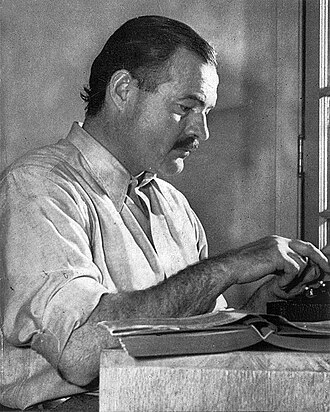
About Ernest Hemingway
Ernest Miller Hemingway was an American writer and journalist. During his lifetime he wrote and had published seven novels; six collections of short stories; and two works of non-fiction. Since his death three novels, four collections of short stories, and three non-fiction autobiographical works have been published. Hemingway received the Nobel Prize in Literature in 1954. Hemingway was born and raised in Oak Park, Illinois. After high school he worked as a reporter but within months he left for the Italian front to be an ambulance driver in World War I. He was seriously injured and returned home within the year. He married his first wife Hadley Richardson in 1922 and moved to Paris, where he worked as a foreign correspondent. During this time Hemingway met, and was influenced by, writers and artists of the 1920s expatriate community known as the "Lost Generation". In 1924 Hemingway wrote his first novel, The Sun Also Rises. In the late 1920s, Hemingway divorced Hadley, married his second wife Pauline Pfeiffer, and moved to Key West, Florida. In 1937 Hemingway went to Spain as a war correspondent to cover the Spanish Civil War. After the war he divorced Pauline, married his third wife Martha Gellhorn, wrote For Whom the Bell Tolls, and moved to Cuba. Hemingway covered World War II in Europe and he was present at Operation Overlord. Later he was in Paris during the liberation of Paris. After the war, he divorced again, married his fourth wife Mary Welsh Hemingway, and wrote Across the River and Into the Trees. Two years later, The Old Man and the Sea was published in 1952. Nine years later, after moving from Cuba to Idaho, he committed suicide in the summer of 1961. Hemingway produced most of his work between the mid 1920s and the mid 1950s, though a number of unfinished works were published posthumously. Hemingway's distinctive writing style is characterized by economy and understatement, and had a significant influence on the development of twentieth-century fiction writing. His protagonists are typically stoical men who exhibit an ideal described as "grace under pressure." Many of his works are now considered classics of American literature. During his lifetime, Hemingway's popularity peaked after the publication of The Old Man and the Sea. Source and more information:


