← Back to QuotesQuotes / Albert Camus

“A man's work is nothing but this slow trek to rediscover, through the detours of art, those two or three great and simple images in whose presence his heart first opened.” — Albert Camus
“A man's work is nothing but this slow trek to rediscover, through the detours of art, those two or three great and simple images in whose presence his heart first opened.”
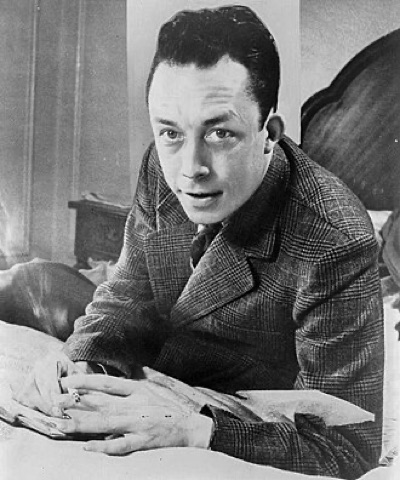
Albert Camus
Philosopher & Laureate
About Albert Camus
Philosopher & Laureate (1913–1960)
Albert Camus was a French Algerian author, philosopher, and journalist who was awarded the Nobel Prize for Literature in 1957. He was a key philosopher of the 20th-century and his most famous work is the novel L'Étranger (The Stranger). In 1949, Camus founded the Group for International Liaisons within the Revolutionary Union Movement, which was a group opposed to some tendencies of the surrealistic movement of André Breton. Camus was the second-youngest recipient of the Nobel Prize for Literature - after Rudyard Kipling - when he became the first African-born writer to receive the award. He is the shortest-lived of any literature laureate to date, having died in an automobile accident just over two years after receiving the award. He is often cited as a proponent of existentialism, the philosophy that he was associated with during his own lifetime, but Camus himself rejected this particular label. In an interview in 1945, Camus rejected any ideological associations: "No, I am not an existentialist. Sartre and I are always surprised to see our names linked…"
Share Card Studio
Books by Albert Camus


Kindred Quotes

“Without music, life would be a mistake.”
Friedrich Nietzsche
Philosopher

“If music be the food of love, play on, Give me excess of it; that surfeiting, The appetite may sicken, and so die.”
William Shakespeare
Playwright & Poet

“A human being is a part of the whole called by us universe, a part limited in time and space. He experiences himself, his thoughts and feeling as something separated from the rest, a kind of optical delusion of his consciousness. This delusion is a kind of prison for us, restricting us to our personal desires and to affection for a few persons nearest to us. Our task must be to free ourselves from this prison by widening our circle of compassion to embrace all living creatures and the whole of nature in its beauty.”
Albert Einstein
Theoretical Physicist