← Back to QuotesQuotes / Albert Camus

“Mostly, I could tell, I made him feel uncomfortable. He didn't understand me, and he was sort of holding it against me. I felt the urge to reassure him that I was like everybody else, just like everybody else. But really there wasn't much point, and I gave up the idea out of laziness.” — Albert Camus
“Mostly, I could tell, I made him feel uncomfortable. He didn't understand me, and he was sort of holding it against me. I felt the urge to reassure him that I was like everybody else, just like everybody else. But really there wasn't much point, and I gave up the idea out of laziness.”
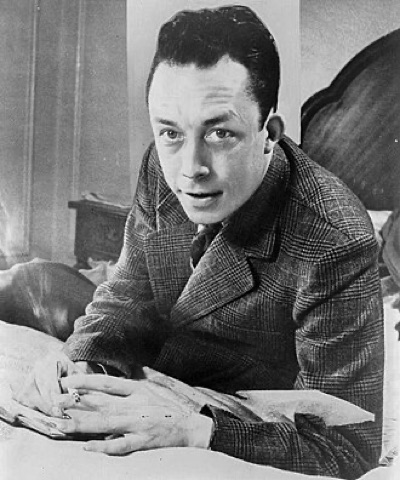
Albert Camus
Philosopher & Laureate — L'Étranger
About Albert Camus
Philosopher & Laureate (1913–1960)
Albert Camus was a French Algerian author, philosopher, and journalist who was awarded the Nobel Prize for Literature in 1957. He was a key philosopher of the 20th-century and his most famous work is the novel L'Étranger (The Stranger). In 1949, Camus founded the Group for International Liaisons within the Revolutionary Union Movement, which was a group opposed to some tendencies of the surrealistic movement of André Breton. Camus was the second-youngest recipient of the Nobel Prize for Literature - after Rudyard Kipling - when he became the first African-born writer to receive the award. He is the shortest-lived of any literature laureate to date, having died in an automobile accident just over two years after receiving the award. He is often cited as a proponent of existentialism, the philosophy that he was associated with during his own lifetime, but Camus himself rejected this particular label. In an interview in 1945, Camus rejected any ideological associations: "No, I am not an existentialist. Sartre and I are always surprised to see our names linked…"