← Back to QuotesQuotes / Carl Sagan
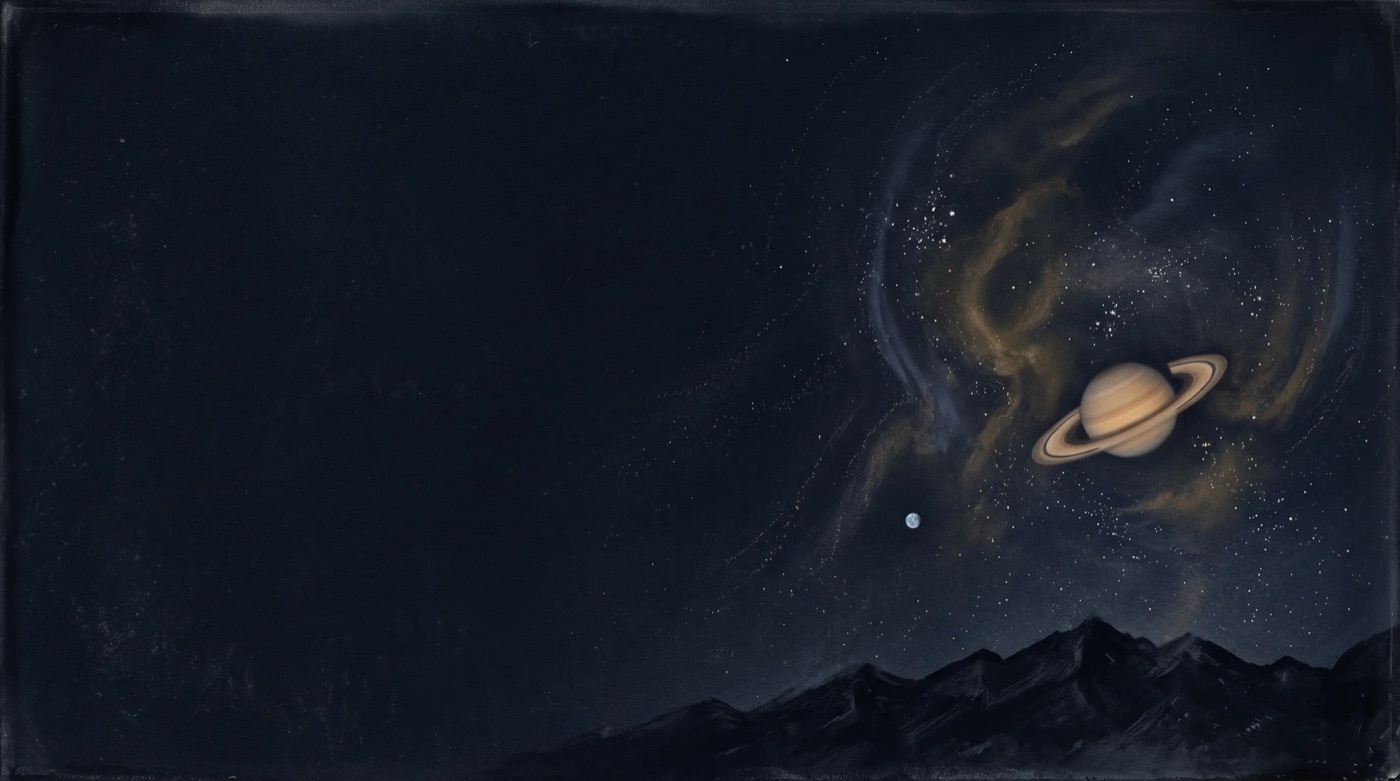
“Every now and then, I'm lucky enough to teach a kindergarten or first-grade class. Many of these children are natural-born scientists - although heavy on the wonder side, and light on skepticism. They're curious, intellectually vigorous. Provocative and insightful questions bubble out of them. They exhibit enormous enthusiasm. I'm asked follow-up questions. They've never heard of the notion of a 'dumb question'. But when I talk to high school seniors, I find something different. They memorize 'facts'. By and large, though, the joy of discovery, the life behind those facts has gone out of them. They've lost much of the wonder and gained very little skepticism. They're worried about asking 'dumb' questions; they are willing to accept inadequate answers, they don't pose follow-up questions, the room is awash with sidelong glances to judge, second-by-second, the approval of their peers. They come to class with their questions written out on pieces of paper, which they surreptitiously examine, waiting their turn and oblivious of whatever discussion their peers are at this moment engaged in. Something has happened between first and twelfth grade. And it's not just puberty. I'd guess that it's partly peer pressure not to excel - except in sports, partly that the society teaches short-term gratification, partly the impression that science or mathematics won't buy you a sports car, partly that so little is expected of students, and partly that there are few rewards or role-models for intelligent discussion of science and technology - or even for learning for it's own sake. Those few who remain interested are vilified as nerds or geeks or grinds. But there's something else. I find many adults are put off when young children pose scientific questions. 'Why is the Moon round?', the children ask. 'Why is grass green?', 'What is a dream?', 'How deep can you dig a hole?', 'When is the world's birthday?', 'Why do we have toes?'. Too many teachers and parents answer with irritation, or ridicule, or quickly move on to something else. 'What did you expect the Moon to be? Square?' Children soon recognize that somehow this kind of question annoys the grown-ups. A few more experiences like it, and another child has been lost to science.” — Carl Sagan
“Every now and then, I'm lucky enough to teach a kindergarten or first-grade class. Many of these children are natural-born scientists - although heavy on the wonder side, and light on skepticism. They're curious, intellectually vigorous. Provocative and insightful questions bubble out of them. They exhibit enormous enthusiasm. I'm asked follow-up questions. They've never heard of the notion of a 'dumb question'. But when I talk to high school seniors, I find something different. They memorize 'facts'. By and large, though, the joy of discovery, the life behind those facts has gone out of them. They've lost much of the wonder and gained very little skepticism. They're worried about asking 'dumb' questions; they are willing to accept inadequate answers, they don't pose follow-up questions, the room is awash with sidelong glances to judge, second-by-second, the approval of their peers. They come to class with their questions written out on pieces of paper, which they surreptitiously examine, waiting their turn and oblivious of whatever discussion their peers are at this moment engaged in. Something has happened between first and twelfth grade. And it's not just puberty. I'd guess that it's partly peer pressure not to excel - except in sports, partly that the society teaches short-term gratification, partly the impression that science or mathematics won't buy you a sports car, partly that so little is expected of students, and partly that there are few rewards or role-models for intelligent discussion of science and technology - or even for learning for it's own sake. Those few who remain interested are vilified as nerds or geeks or grinds. But there's something else. I find many adults are put off when young children pose scientific questions. 'Why is the Moon round?', the children ask. 'Why is grass green?', 'What is a dream?', 'How deep can you dig a hole?', 'When is the world's birthday?', 'Why do we have toes?'. Too many teachers and parents answer with irritation, or ridicule, or quickly move on to something else. 'What did you expect the Moon to be? Square?' Children soon recognize that somehow this kind of question annoys the grown-ups. A few more experiences like it, and another child has been lost to science.”
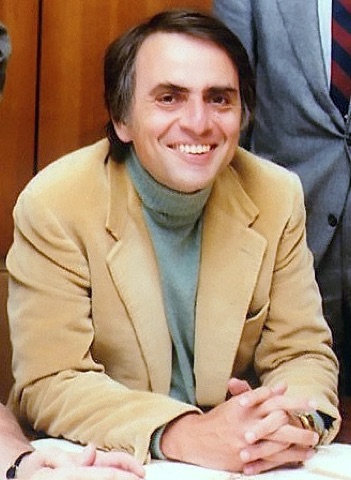
Carl Sagan
Astronomer & Author — The Demon-Haunted World: Science as a Candle in the Dark
Try alternate cosmic art
About Carl Sagan
Astronomer & Author (1934–1996)
Carl Sagan (1934–1996) was an American astronomer, planetary scientist, cosmologist, and Pulitzer Prize–winning author who published more than 600 scientific papers and articles alongside landmark works including Cosmos, Pale Blue Dot, Contact, and The Demon-Haunted World. A longtime professor at Cornell University and advisor to NASA’s Mariner, Viking, and Voyager missions, Sagan helped assemble the Voyager Golden Record and championed scientific wonder, skeptical inquiry, and our shared stewardship of Earth.
Share Card Studio
Books Like The Demon-Haunted World: Science as a Candle in the Dark


Kindred Quotes
“I am enough of an artist to draw freely upon my imagination. Imagination is more important than knowledge. Knowledge is limited. Imagination encircles the world.”
Albert Einstein
Theoretical Physicist
“Science is not only compatible with spirituality; it is a profound source of spirituality.”
Carl Sagan
Astronomer & Author
“One, remember to look up at the stars and not down at your feet. Two, never give up work. Work gives you meaning and purpose and life is empty without it. Three, if you are lucky enough to find love, remember it is there and don't throw it away.”
Stephen Hawking
Theoretical Physicist