← Back to QuotesQuotes / Dr. Seuss

“It has often been said there’s so much to be read, you never can cram all those words in your head. So the writer who breeds more words than he needs is making a chore for the reader who reads. That's why my belief is the briefer the brief is, the greater the sigh of the reader's relief is. And that's why your books have such power and strength. You publish with shorth! (Shorth is better than length.)” — Dr. Seuss
“It has often been said there’s so much to be read, you never can cram all those words in your head. So the writer who breeds more words than he needs is making a chore for the reader who reads. That's why my belief is the briefer the brief is, the greater the sigh of the reader's relief is. And that's why your books have such power and strength. You publish with shorth! (Shorth is better than length.)”
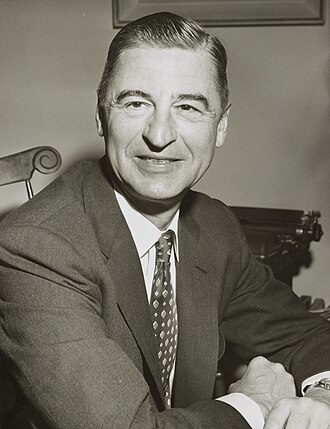
Dr. Seuss
Author & Illustrator
About Dr. Seuss
Author & Illustrator (1904–1991)
Theodor Seuss Geisel was born on in Springfield, Massachusetts to German-American parents. He attended public schools and then went to Dartmouth College, where he became editor of the Dartmouth _Jack-O-Lantern_. When he was barred from all extracurricular activities, he continued to write for the paper using the pseudonym "Seuss." After he graduated he became a contributor to the magazine The Judge, and began to sign his work as "Dr. Seuss." He attended Lincoln College, Oxford to earn a D.Phil in literature, but married Helen Palmer in 1927 and returned to the United States without earning the degree. He published humorous articles and illustrations in _The Judge_, _The Saturday Evening Post_, _Life_, _Vanity Fair_, and _Liberty_ and supported himself and his wife through the Great Depression with commercial illustrations for General Electric, NBC, Standard Oil, and many other companies. He also wrote and drew a short-lived comic strip called _Hejji_ in 1935. In 1937, returning from an ocean voyage to Europe, he wrote his first book, _And to Think That I Saw It on Mulberry Street_. When World War II began, he began to create political cartoons and became an editorial cartoonist for the left-wing New York City newspaper, _PM_. His political cartoons were later published in _Dr. Seuss Goes to War_. In 1942, he began producing propaganda posters for the Treasury Department and the War Production Board. In 1943, he joined the Animation Department of the First Motion Picture Unit of the U.S. Army Air Forces, where he wrote propaganda and training films. After the war, he and his wife moved to La Jolla, California. He returning to writing and illustrating children's books. In 1954, _Life_ magazine published an article on the dullness of children's books, and Geisel was inspired to write _The Cat in the Hat_. In 1967, his wife Helen committed suicide. He married Audrey Stone Dimond in 1968. Geisel died in La Jolla, California in 1991. Over the course of his career, Geisel wrote over 60 children's books, either under the pseudonym "Dr. Seuss" for the ones he wrote and illustrated himself, "Theo. LeSieg" for books he wrote but others illustrated, or "Rosetta Stone" for _Because a Little Bug Went Ka-choo_ (1975). He also wrote two books for adults: _The Seven Lady Godivas_; _Oh, The Places You'll Go!_; and _You're Only Old Once_.
Share Card Studio
Books by Dr. Seuss


Kindred Quotes

“Those who find ugly meanings in beautiful things are corrupt without being charming. This is a fault. Those who find beautiful meanings in beautiful things are the cultivated. For these there is hope. They are the elect to whom beautiful things mean only Beauty. There is no such thing as a moral or an immoral book. Books are well written, or badly written. That is all.”
Oscar Wilde
Playwright & Wit
“Outside of a dog, a book is man's best friend. Inside of a dog it's too dark to read.”
Groucho Marx
Comedian & Writer
“Good friends, good books, and a sleepy conscience: this is the ideal life.”
Mark Twain
Novelist & Humorist