← Back to QuotesQuotes / Friedrich Nietzsche

Life & Philosophy19th Century
“However modest one may be in one's demand for intellectual cleanliness, one cannot help feeling, when coming into contact with the New Testament, a kind of inexpressible discomfiture: for the unchecked impudence with which the least qualified want to raise their voice on the greatest problems, and even claim to be judges of things, surpasses all measure. The shameless levity with which the most intractable problems (life, world, God, purpose of life) are spoken of, as if they were not problems at all but simply things that these little bigots KNEW!” — Friedrich Nietzsche
“However modest one may be in one's demand for intellectual cleanliness, one cannot help feeling, when coming into contact with the New Testament, a kind of inexpressible discomfiture: for the unchecked impudence with which the least qualified want to raise their voice on the greatest problems, and even claim to be judges of things, surpasses all measure. The shameless levity with which the most intractable problems (life, world, God, purpose of life) are spoken of, as if they were not problems at all but simply things that these little bigots KNEW!”
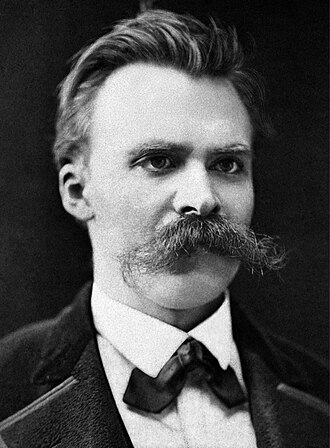
Friedrich Nietzsche
Philosopher — The Will to Power
About Friedrich Nietzsche
Philosopher (1844–1900)
Friedrich Nietzsche was a 19th-century German philosopher and classical philologist whose sharp critiques of morality, religion, and modern culture reshaped European thought. Trained in philology before turning fully to philosophy, he wrote provocative books such as Thus Spoke Zarathustra, Beyond Good and Evil, and On the Genealogy of Morality, which introduced ideas like the will to power and the revaluation of all values. His work later became foundational for existentialism and postmodern thinking.