← Back to QuotesQuotes / Friedrich Nietzsche

“On the whole, scientific methods are at least as important results of investigation as any other results, for the scientific spirit is based upon a knowledge of method, and if the methods were lost, all the results of science could not prevent the renewed prevalence of superstition and absurdity. Clever people may learn as much as they like of the results of science, but one still notices in their conversation, and especially in the hypotheses they make, that they lack the scientific spirit; they have not the instinctive distrust of the devious courses of thinking which, in consequence of long training, has taken root in the soul of every scientific man. It is enough for them to find any kind of hypothesis on a subject, they are then all on fire for it, and imagine the matter is thereby settled. To have an opinion is with them equivalent to immediately becoming fanatical for it, and finally taking it to heart as a conviction. In the case of an unexplained matter they become heated for the first idea that comes into their head which has any resemblance to an explanation—a course from which the worst results constantly follow, especially in the field of politics. On that account everybody should nowadays have become thoroughly acquainted with at least one science, for then surely he knows what is meant by method, and how necessary is the extremest carefulness.” — Friedrich Nietzsche
“On the whole, scientific methods are at least as important results of investigation as any other results, for the scientific spirit is based upon a knowledge of method, and if the methods were lost, all the results of science could not prevent the renewed prevalence of superstition and absurdity. Clever people may learn as much as they like of the results of science, but one still notices in their conversation, and especially in the hypotheses they make, that they lack the scientific spirit; they have not the instinctive distrust of the devious courses of thinking which, in consequence of long training, has taken root in the soul of every scientific man. It is enough for them to find any kind of hypothesis on a subject, they are then all on fire for it, and imagine the matter is thereby settled. To have an opinion is with them equivalent to immediately becoming fanatical for it, and finally taking it to heart as a conviction. In the case of an unexplained matter they become heated for the first idea that comes into their head which has any resemblance to an explanation—a course from which the worst results constantly follow, especially in the field of politics. On that account everybody should nowadays have become thoroughly acquainted with at least one science, for then surely he knows what is meant by method, and how necessary is the extremest carefulness.”
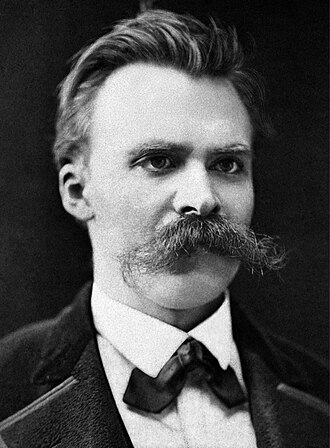
Friedrich Nietzsche
Philosopher — Human
About Friedrich Nietzsche
Philosopher (1844–1900)
Friedrich Nietzsche was a 19th-century German philosopher and classical philologist whose sharp critiques of morality, religion, and modern culture reshaped European thought. Trained in philology before turning fully to philosophy, he wrote provocative books such as Thus Spoke Zarathustra, Beyond Good and Evil, and On the Genealogy of Morality, which introduced ideas like the will to power and the revaluation of all values. His work later became foundational for existentialism and postmodern thinking.
Share Card Studio
Books by Friedrich Nietzsche


Kindred Quotes
“The man of knowledge must be able not only to love his enemies but also to hate his friends.”
Friedrich Nietzsche
Philosopher
“A lady's imagination is very rapid; it jumps from admiration to love, from love to matrimony in a moment.”
Jane Austen
English Novelist

“Every heart sings a song, incomplete, until another heart whispers back. Those who wish to sing always find a song. At the touch of a lover, everyone becomes a poet.”
Plato
Greek Philosopher