← Back to QuotesQuotes / Haruki Murakami
“Nakata had passed away calmly in his sleep, most likely not thinking of anything. His face was peaceful, with no signs of suffering, regret, or confusion. Very Nakata-like, Hoshino concluded. But what his life really meant, Hoshino had no idea. Not that anybody's life had more clear-cut meaning to it. What's really important for people, what really has dignity, is how they die. Still, how you live determines how you die. These thoughts ran through his head as he stared at the face of the dead old man.” — Haruki Murakami
Nakata had passed away calmly in his sleep, most likely not thinking of anything. His face was peaceful, with no signs of suffering, regret, or confusion. Very Nakata-like, Hoshino concluded. But what his life really meant, Hoshino had no idea. Not that anybody's life had more clear-cut meaning to it. What's really important for people, what really has dignity, is how they die. Still, how you live determines how you die. These thoughts ran through his head as he stared at the face of the dead old man.
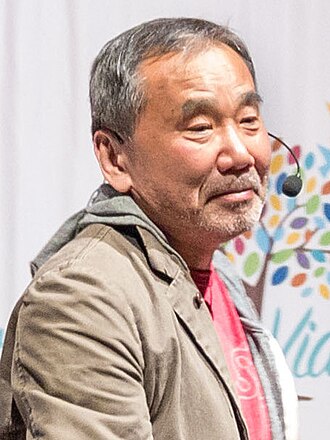
Haruki Murakami
Japanese Novelist — Kafka on the Shore
Typographic edition
No artwork cached for this quote yet. On a reader’s first visit, WSIRN can generate bespoke artwork, cache it, and queue it for editorial review.
About Haruki Murakami
Japanese Novelist (b. 1949)
Haruki Murakami is a Japanese novelist and translator whose work emerged in the postwar era and blends surrealism, jazz, and Western literature into dreamlike stories about isolation and the search for identity. He began publishing in 1979 with Hear the Wind Sing, then reached international fame with Norwegian Wood before crafting intersecting parallel realities in novels such as Hard-Boiled Wonderland and the End of the World and Kafka on the Shore. His honors include the World Fantasy Award, the Franz Kafka Prize, and the Tanizaki Prize, and his books have been translated into more than 50 languages. Readers who enjoy Dance Dance Dance will find his mix of noir detachment and metaphysical wandering a natural next step.