← Back to QuotesQuotes / Rainer Maria Rilke
“There is only one way: Go within. Search for the cause, find the impetus that bids you write. Put it to this test: Does it stretch out its roots in the deepest place of your heart? Can you avow that you would die if you were forbidden to write? Above all, in the most silent hour of your night, ask yourself this: Must I write? Dig deep into yourself for a true answer. And if it should ring its assent, if you can confidently meet this serious question with a simple, “I must,” then build your life upon it. It has become your necessity. Your life, in even the most mundane and least significant hour, must become a sign, a testimony to this urge.” — Rainer Maria Rilke
“There is only one way: Go within. Search for the cause, find the impetus that bids you write. Put it to this test: Does it stretch out its roots in the deepest place of your heart? Can you avow that you would die if you were forbidden to write? Above all, in the most silent hour of your night, ask yourself this: Must I write? Dig deep into yourself for a true answer. And if it should ring its assent, if you can confidently meet this serious question with a simple, “I must,” then build your life upon it. It has become your necessity. Your life, in even the most mundane and least significant hour, must become a sign, a testimony to this urge.”
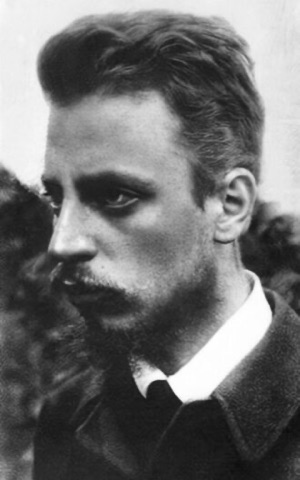
Rainer Maria Rilke
Austrian Poet — Letters to a Young Poet
About Rainer Maria Rilke
Austrian Poet (1875–1926)
Born in Prague in 1875, when the city belonged to the Austro-Hungarian Empire, Rainer Maria Rilke wrote in German and stands among the most celebrated lyric voices of modern European letters. His poetry turns inward, probing solitude, mysticism, and the elusive texture of experience, while his time as secretary to the sculptor Auguste Rodin taught him to render objects with sharp, deliberate precision. Readers often begin with The Book of Hours or New Poems, then move on to The Notebooks of Malte Laurids Brigge, his singular novel. His late Duino Elegies and Sonnets to Orpheus, both appearing in 1922, remain his most enduring achievements, weaving beauty and suffering into visionary, demanding verse.
Share Card Studio
Books Like Letters to a Young Poet


Kindred Quotes
“If music be the food of love, play on, Give me excess of it; that surfeiting, The appetite may sicken, and so die.”
William Shakespeare
Playwright & Poet

“A lady's imagination is very rapid; it jumps from admiration to love, from love to matrimony in a moment.”
Jane Austen
English Novelist
“If there's a book that you want to read, but it hasn't been written yet, then you must write it.”
Toni Morrison
Writer & Voice