← Back to QuotesQuotes / Stefan Zweig
Books & Reading, Love & Human Connection, Science & the Cosmos20th Century#cosmos#reading#imagination
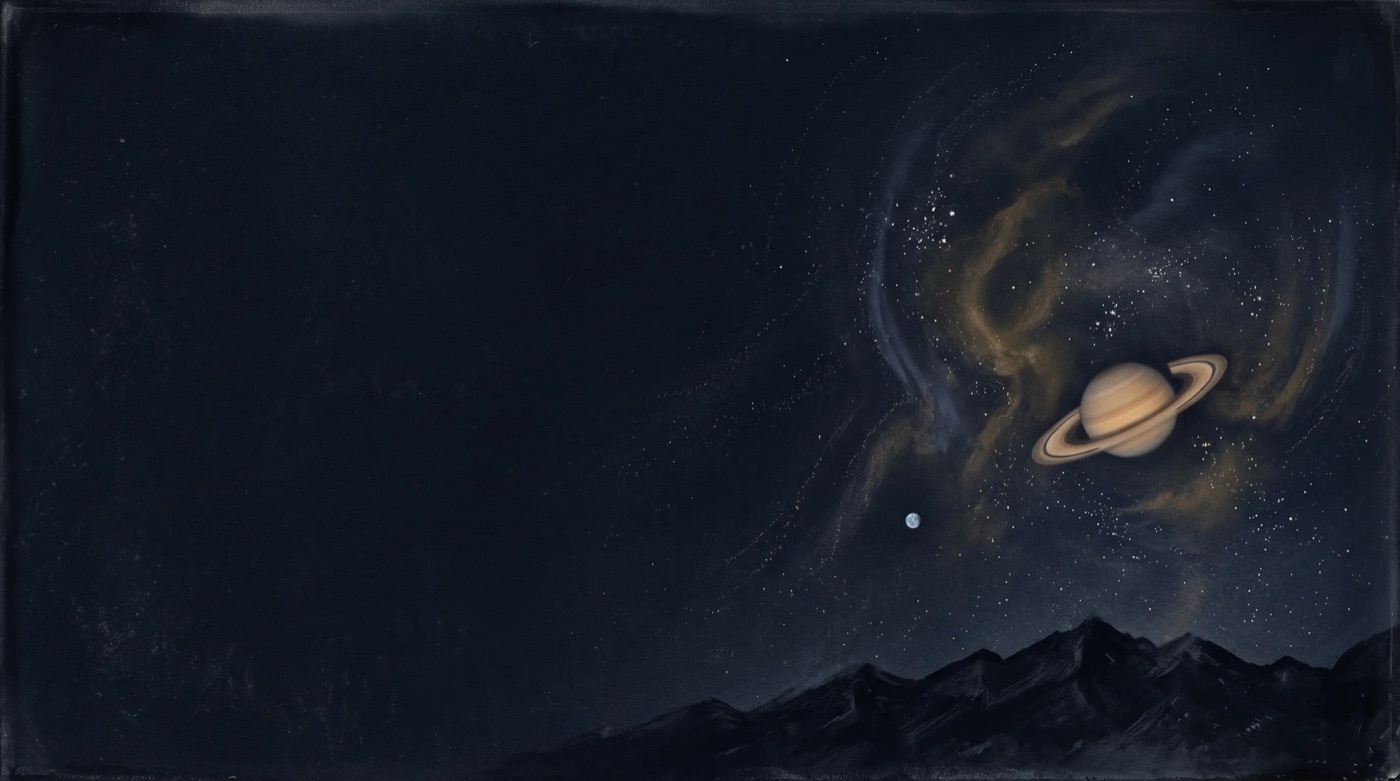
“Holding a precious book meant to Mendel what an assignment with a woman might to another man. These moments were his platonic nights of love. Books had power over him; money never did. Great collectors, including the founder of a collection in Princeton University Library, tried in vain to recruit him as an adviser and buyer for their libraries—Jakob Mendel declined; no one could imagine him anywhere but in the Café Gluck. Thirty-three years ago, when his beard was still soft and black and he had ringlets over his forehead, he had come from the east to Vienna, a crook-backed lad, to study for the rabbinate, but he had soon abandoned Jehovah the harsh One God to give himself up to idolatry in the form of the brilliant, thousand-fold polytheism of books. That was when he had first found his way to the Café Gluck, and gradually it became his workplace, his headquarters, his post office, his world. Like an astronomer alone in his observatory, studying myriads of stars every night through the tiny round lens of the telescope, observing their mysterious courses, their wandering multitude as they are extinguished and then appear again, so Jakob Mendel looked through his glasses out from that rectangular table into the other universe of books, also eternally circling and being reborn in that world above our own.” — Stefan Zweig
“Holding a precious book meant to Mendel what an assignment with a woman might to another man. These moments were his platonic nights of love. Books had power over him; money never did. Great collectors, including the founder of a collection in Princeton University Library, tried in vain to recruit him as an adviser and buyer for their libraries—Jakob Mendel declined; no one could imagine him anywhere but in the Café Gluck. Thirty-three years ago, when his beard was still soft and black and he had ringlets over his forehead, he had come from the east to Vienna, a crook-backed lad, to study for the rabbinate, but he had soon abandoned Jehovah the harsh One God to give himself up to idolatry in the form of the brilliant, thousand-fold polytheism of books. That was when he had first found his way to the Café Gluck, and gradually it became his workplace, his headquarters, his post office, his world. Like an astronomer alone in his observatory, studying myriads of stars every night through the tiny round lens of the telescope, observing their mysterious courses, their wandering multitude as they are extinguished and then appear again, so Jakob Mendel looked through his glasses out from that rectangular table into the other universe of books, also eternally circling and being reborn in that world above our own.”
SZ
Stefan Zweig
Philosopher — The Collected Stories of Stefan Zweig
About Stefan Zweig
Philosopher
Stefan Zweig (geboren am 28. November 1881 in Wien, Österreich-Ungarn; gestorben am 23. Februar 1942 in Petrópolis, Brasilien) war ein österreichischer Schriftsteller, Übersetzer und Pazifist. Zweig gehörte zu den beliebtesten deutschsprachigen Schriftstellern seiner Zeit. Mit seinen vielgelesenen psychologischen Novellen wie Brennendes Geheimnis (1911), Angst, Brief einer Unbekannten, Der Amokläufer und literarisierten Biographien, darunter Magellan. Der Mann und seine Tat sowie Triumph und Tragik des Erasmus von Rotterdam, gehörte er zu den bedeutenden deutschsprachigen Erzählern zu Beginn des 20. Jahrhunderts. Seine Sprache ist durch Anschaulichkeit und klangliche Gefälligkeit gekennzeichnet; die Werke sind in ihrer Erzählweise sowie den stilistischen Mitteln weitgehend dem Realismus verpflichtet. Sie vereinigen klassische Elemente, darunter einen dramatischen Handlungsablauf, mit psychoanalytisch gezeichneten Figuren und betrachtet aus unterschiedlichen Perspektiven. So bot Zweig seiner breiten Leserschaft einen Zugang zu einer Literatur, in der ihre Gegenwart reflektiert wurde, ohne sie mit modernistischen Erzählweisen zu konfrontieren. Unter seinen zahlreichen Prosaarbeiten ragen besonders die Schachnovelle, die Sternstunden der Menschheit sowie seine Erinnerungen Die Welt von Gestern hervor. ---------- Stefan Zweig (born November 28, 1881, in Vienna, Austria-Hungary; died February 23, 1942, in Petrópolis, Brazil) was an Austrian writer, translator, and pacifist. Zweig was among the most popular German-language writers of his time. With his widely read psychological novellas such as Burning Secret (1911), Fear, Letter from an Unknown Woman, and The Amok, as well as literary biographies including Magellan: The Man and His Deed and Triumph and Tragedy of Erasmus of Rotterdam, he was one of the most important German-language storytellers of the early 20th century. His language is characterized by vividness and sonorous quality; his works, in their narrative style and stylistic devices, are largely committed to realism. They combine classical elements, including a dramatic plot, with psychoanalytically drawn characters and are viewed from diverse perspectives. Zweig thus offered his broad readership access to a literature that reflected their present without confronting them with modernist narrative styles. Among his numerous prose works, the novella The Royal Game, The Tide of Fortune, and his memoir The World of Yesterday stand out in particular. Source: Stefan Zweig, Wikipedia.
Share Card Studio
Books by Stefan Zweig


Kindred Quotes

“The man of knowledge must be able not only to love his enemies but also to hate his friends.”
Friedrich Nietzsche
Philosopher
“What really knocks me out is a book that, when you're all done reading it, you wish the author that wrote it was a terrific friend of yours and you could call him up on the phone whenever you felt like it. That doesn't happen much, though.”
J.D. Salinger
Author

“A human being is a part of the whole called by us universe, a part limited in time and space. He experiences himself, his thoughts and feeling as something separated from the rest, a kind of optical delusion of his consciousness. This delusion is a kind of prison for us, restricting us to our personal desires and to affection for a few persons nearest to us. Our task must be to free ourselves from this prison by widening our circle of compassion to embrace all living creatures and the whole of nature in its beauty.”
Albert Einstein
Theoretical Physicist