← Back to QuotesQuotes / Virginia Woolf
“The only thing in this world is music–music and books and one or two pictures. I am going to found a colony where there shall be no marrying–unless you happen to fall in love with a symphony of Beethoven–no human element at all, except what comes through Art–nothing but ideal peace and endless meditation. The whole of human beings grows too complicated, my only wonder is that we don’t fill more madhouses: the insane view of life has much to be said for it–perhaps its the sane one after all: and we, the sad sober respectable citizens really rave every moment of our lives and deserve to be shut up perpetually. My spring melancholy is developing these hot days into summer madness.” — Virginia Woolf
The only thing in this world is music–music and books and one or two pictures. I am going to found a colony where there shall be no marrying–unless you happen to fall in love with a symphony of Beethoven–no human element at all, except what comes through Art–nothing but ideal peace and endless meditation. The whole of human beings grows too complicated, my only wonder is that we don’t fill more madhouses: the insane view of life has much to be said for it–perhaps its the sane one after all: and we, the sad sober respectable citizens really rave every moment of our lives and deserve to be shut up perpetually. My spring melancholy is developing these hot days into summer madness.
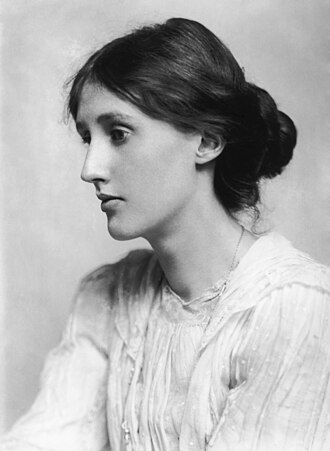
Virginia Woolf
Modernist Novelist — The Letters of Virginia Woolf: Vol. One
Typographic edition
No artwork cached for this quote yet. On a reader’s first visit, WSIRN can generate bespoke artwork, cache it, and queue it for editorial review.
About Virginia Woolf
Modernist Novelist (1882–1941)
Virginia Woolf was an English novelist, essayist, diarist, epistler, publisher, feminist, and writer of short stories, regarded as one of the foremost modernist literary figures of the twentieth century. Comment from Ursula Le Guin on The Guardian: > You can't write science fiction well if you haven't read it, though not all who try to write it know this. But nor can you write it well if you haven't read anything else. Genre is a rich dialect, in which you can say certain things in a particularly satisfying way, but if it gives up connection with the general literary language it becomes a jargon, meaningful only to an ingroup. Useful models may be found quite outside the genre. I learned a lot from reading the ever-subversive Virginia Woolf. > I was 17 when I read Orlando. It was half-revelation, half-confusion to me at that age, but one thing was clear: that she imagined a society vastly different from our own, an exotic world, and brought it dramatically alive. I'm thinking of the Elizabethan scenes, the winter when the Thames froze over. Reading, I was there, saw the bonfires blazing in the ice, felt the marvellous strangeness of that moment 500 years ago – the authentic thrill of being taken absolutely elsewhere. > How did she do it? By precise, specific descriptive details, not heaped up and not explained: a vivid, telling imagery, highly selected, encouraging the reader's imagination to fill out the picture and see it luminous, complete. > In Flush, Woolf gets inside a dog's mind, that is, a non-human brain, an alien mentality – very science-fictional if you look at it that way. Again what I learned was the power of accurate, vivid, highly selected detail. I imagine Woolf looking down at the dog asleep beside the ratty armchair she wrote in and thinking what are your dreams? and listening... sniffing the wind... after the rabbit, out on the hills, in the dog's timeless world. > Useful stuff, for those who like to see through eyes other than our own.
Share Card Studio
Books by Virginia Woolf


Kindred Quotes
“What really knocks me out is a book that, when you're all done reading it, you wish the author that wrote it was a terrific friend of yours and you could call him up on the phone whenever you felt like it. That doesn't happen much, though.”
J.D. Salinger
Author

“The person, be it gentleman or lady, who has not pleasure in a good novel, must be intolerably stupid.”
Jane Austen
English Novelist
“As he read, I fell in love the way you fall asleep: slowly, and then all at once.”
John Green
American Author