← Back to QuotesQuotes / Albert Camus

Life & Philosophy20th Century
“To those who despair of everything, not reason but only passion can provide a faith, and in this particular case it must be the same passion that lay at the root of the despair—namely, humiliation and hatred. There was no longer any standard of values, both common to and superior to all these men, in the name of which it would have been possible for them to judge one another.” — Albert Camus
“To those who despair of everything, not reason but only passion can provide a faith, and in this particular case it must be the same passion that lay at the root of the despair—namely, humiliation and hatred. There was no longer any standard of values, both common to and superior to all these men, in the name of which it would have been possible for them to judge one another.”
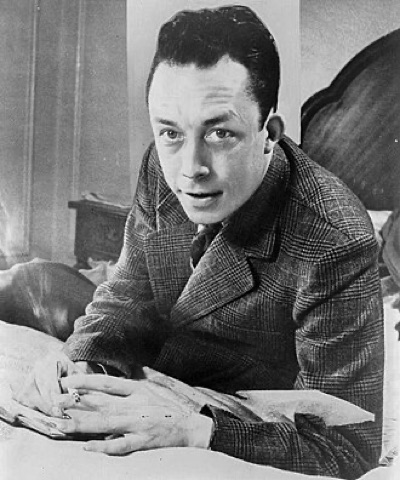
Albert Camus
Philosopher & Laureate — The Rebel
About Albert Camus
Philosopher & Laureate (1913–1960)
Albert Camus was a French Algerian author, philosopher, and journalist who was awarded the Nobel Prize for Literature in 1957. He was a key philosopher of the 20th-century and his most famous work is the novel L'Étranger (The Stranger). In 1949, Camus founded the Group for International Liaisons within the Revolutionary Union Movement, which was a group opposed to some tendencies of the surrealistic movement of André Breton. Camus was the second-youngest recipient of the Nobel Prize for Literature - after Rudyard Kipling - when he became the first African-born writer to receive the award. He is the shortest-lived of any literature laureate to date, having died in an automobile accident just over two years after receiving the award. He is often cited as a proponent of existentialism, the philosophy that he was associated with during his own lifetime, but Camus himself rejected this particular label. In an interview in 1945, Camus rejected any ideological associations: "No, I am not an existentialist. Sartre and I are always surprised to see our names linked…"