← Back to QuotesQuotes / J.R.R. Tolkien
“Ónen i-estel edain, ú-chebin estel anim. (I gave Hope to the Dúnedain, I have kept none for myself.) (Gilraen's linnod)” — J.R.R. Tolkien
Ónen i-estel edain, ú-chebin estel anim. (I gave Hope to the Dúnedain, I have kept none for myself.) (Gilraen's linnod)
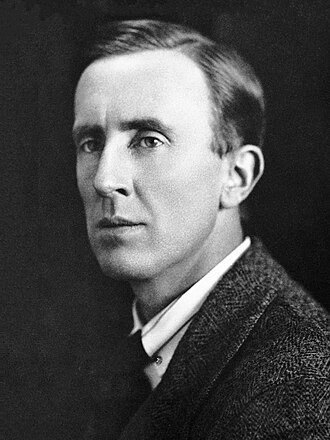
J.R.R. Tolkien
Author & Philologist — The Return of the King
Typographic edition
No artwork cached for this quote yet. On a reader’s first visit, WSIRN can generate bespoke artwork, cache it, and queue it for editorial review.
About J.R.R. Tolkien
Author & Philologist (1892–1973)
John Ronald Reuel Tolkien was an English philologist and academic whose imaginative work reshaped modern fantasy. Born in Bloemfontein in 1892 to English parents, he grew up in the Birmingham countryside and later taught Anglo-Saxon and English language at Oxford. Drawing on his experience of the First World War and his deep love of invented languages, he built the world of Middle-earth with a mythic depth that still feels remarkably lived-in. Readers who begin with The Hobbit often find themselves carried into The Fellowship of the Ring, The Two Towers, and The Return of the King, while the posthumous Silmarillion reveals the older histories beneath them.
Share Card Studio
Books by J.R.R. Tolkien


Kindred Quotes
“All that is gold does not glitter, Not all those who wander are lost; The old that is strong does not wither, Deep roots are not reached by the frost. From the ashes a fire shall be woken, A light from the shadows shall spring; Renewed shall be blade that was broken, The crownless again shall be king.”
J.R.R. Tolkien
Author & Philologist
“I must not fear. Fear is the mind-killer. Fear is the little-death that brings total obliteration. I will face my fear. I will permit it to pass over me and through me. And when it has gone past I will turn the inner eye to see its path. Where the fear has gone there will be nothing. Only I will remain.”
Frank Herbert
Science Fiction Author

“Those who find ugly meanings in beautiful things are corrupt without being charming. This is a fault. Those who find beautiful meanings in beautiful things are the cultivated. For these there is hope. They are the elect to whom beautiful things mean only Beauty. There is no such thing as a moral or an immoral book. Books are well written, or badly written. That is all.”
Oscar Wilde
Playwright & Wit