← Back to QuotesQuotes / Marcus Aurelius
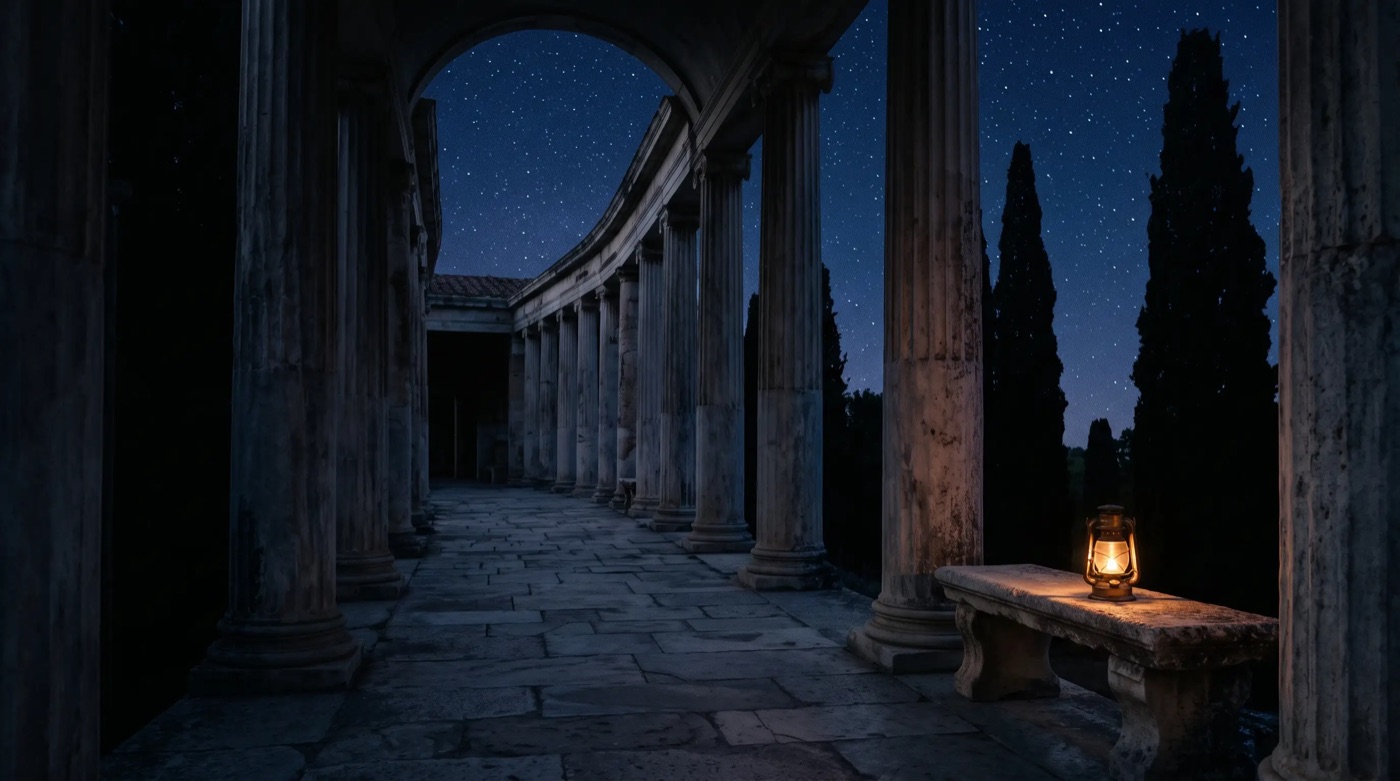
“The time of a man's life is as a point; the substance of it ever flowing, the sense obscure; and the whole composition of the body tending to corruption. His soul is restless, fortune uncertain, and fame doubtful; to be brief, as a stream so are all things belonging to the body; as a dream, or as a smoke, so are all that belong unto the soul. Our life is a warfare, and a mere pilgrimage. Fame after life is no better than oblivion. What is it then that will adhere and follow? Only one thing, philosophy. And philosophy doth consist in this, for a man to preserve that spirit which is within him, from all manner of contumelies and injuries, and above all pains or pleasures; never to do anything either rashly, or feignedly, or hypocritically: only to depend from himself, and his own proper actions: all things that happen unto him to embrace contentendly, as coming from Him from whom he himself also came; and above all things, with all meekness and a calm cheerfulness, to expect death, as being nothing else but the resolution of those elements, of which every creature is composed. And if the elements themselves suffer nothing by their perpetual conversion of one into another, that dissolution, and alteration, which is so common unto all, why should it be feared by any? Is not this according to nature? But nothing that is according to nature can be evil.” — Marcus Aurelius
“The time of a man's life is as a point; the substance of it ever flowing, the sense obscure; and the whole composition of the body tending to corruption. His soul is restless, fortune uncertain, and fame doubtful; to be brief, as a stream so are all things belonging to the body; as a dream, or as a smoke, so are all that belong unto the soul. Our life is a warfare, and a mere pilgrimage. Fame after life is no better than oblivion. What is it then that will adhere and follow? Only one thing, philosophy. And philosophy doth consist in this, for a man to preserve that spirit which is within him, from all manner of contumelies and injuries, and above all pains or pleasures; never to do anything either rashly, or feignedly, or hypocritically: only to depend from himself, and his own proper actions: all things that happen unto him to embrace contentendly, as coming from Him from whom he himself also came; and above all things, with all meekness and a calm cheerfulness, to expect death, as being nothing else but the resolution of those elements, of which every creature is composed. And if the elements themselves suffer nothing by their perpetual conversion of one into another, that dissolution, and alteration, which is so common unto all, why should it be feared by any? Is not this according to nature? But nothing that is according to nature can be evil.”
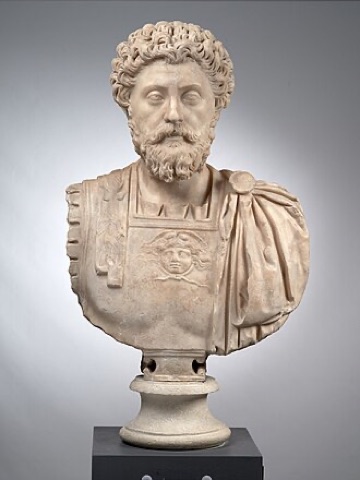
Marcus Aurelius
Roman Stoic Emperor — Meditations
About Marcus Aurelius
Roman Stoic Emperor (121–180 AD)
Marcus Aurelius Antoninus was Roman Emperor from 161 to 180. He ruled with Lucius Verus as co-emperor from 161 until Verus' death in 169. He was the last of the "Five Good Emperors", and is also considered one of the most important Stoic philosophers. During his reign, the empire defeated a revitalized Parthian Empire; Aurelius' general Avidius Cassius sacked the capital Ctesiphon in 164. Aurelius fought the Marcomanni, Quadi, and Sarmatians with success during the Marcomannic Wars, but the threat of the Germanic Tribes began to represent a troubling reality for the empire. A revolt in the east led by Avidius Cassius failed to gain momentum and was suppressed immediately. Marcus Aurelius' work Meditations, written in Greek while on campaign between 170 and 180, is still revered as a literary monument to a government of service and duty. It serves as an example of how Aurelius approached the Platonic ideal of a philosopher-king and how he symbolized much of what was best about Roman civilization.
Share Card Studio
Books Like Meditations


Kindred Quotes

“A lady's imagination is very rapid; it jumps from admiration to love, from love to matrimony in a moment.”
Jane Austen
English Novelist

“A human being is a part of the whole called by us universe, a part limited in time and space. He experiences himself, his thoughts and feeling as something separated from the rest, a kind of optical delusion of his consciousness. This delusion is a kind of prison for us, restricting us to our personal desires and to affection for a few persons nearest to us. Our task must be to free ourselves from this prison by widening our circle of compassion to embrace all living creatures and the whole of nature in its beauty.”
Albert Einstein
Theoretical Physicist
“Without music, life would be a mistake.”
Friedrich Nietzsche
Philosopher