← Back to QuotesQuotes / Mark Twain

Life & Philosophy19th Century
“The easy confidence with which I know another man's religion is folly teaches me to suspect that my own is also. I would not interfere with any one's religion, either to strengthen it or to weaken it. I am not able to believe one's religion can affect his hereafter one way or the other, no matter what that religion may be. But it may easily be a great comfort to him in this life--hence it is a valuable possession to him.” — Mark Twain
“The easy confidence with which I know another man's religion is folly teaches me to suspect that my own is also. I would not interfere with any one's religion, either to strengthen it or to weaken it. I am not able to believe one's religion can affect his hereafter one way or the other, no matter what that religion may be. But it may easily be a great comfort to him in this life--hence it is a valuable possession to him.”
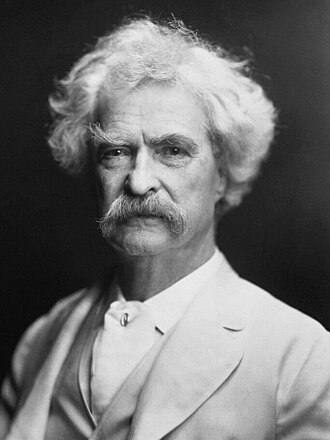
Mark Twain
Novelist & Humorist — The Autobiography of Mark Twain
About Mark Twain
Novelist & Humorist (1835–1910)
Samuel Langhorne Clemens, writing as Mark Twain, was a nineteenth-century American humorist whose sharp wit and river-bred realism reshaped the nation's literary voice. Drawing on his years as a Mississippi pilot, printer, miner, and lecturer, he turned satire on hypocrisy, religious pretense, and social pretension into enduring art. William Faulkner hailed him as the father of American literature, and Adventures of Huckleberry Finn, often called the Great American Novel, remains his most celebrated achievement. Readers who enjoy its companions, The Adventures of Tom Sawyer, The Prince and the Pauper, and A Connecticut Yankee in King Arthur's Court, will find the same playful, piercing intelligence at work.